Mitosis
Mitosis is a type of cell division in which two identical daughter cells are produced from a single parent cell. Mitosis involves four phases: prophase, metaphase, anaphase, telophase. At the end of telophase, two diploid cells containing the same set of chromosomes from the parent cell are produced. Cytokinensis is the physical division of the cytoplasm of a parent cell into two. This process occurs concurrently with the latter stages of mitosis. In animal cells, cytokinesis involves the formation of a cleavage furrow , which pinches off or divides the cell into two. In plants, instead of being cleaved, a cell plate forms between the two nuclei. The cell plate enlarges and elongates until it merges with the cell walls, and eventually forms a new cell wall.
Mitosis: Cell Division for Growth and Repair
Mitosis is the process by which somatic (body) cells divide to produce two identical daughter cells. This ensures that each new cell receives an exact copy of the parent cell's genetic material
Prophase
Chromatin condenses into chromosomes, nuclear membrane breaks down, spindle fibers form.
Metaphase
Chromosomes align at the cell's equator, attached to spindle fibers at their centromeres.
Anaphase
Sister chromatids separate and move to opposite poles of the cell.
Telophase
Nuclear membranes reform, chromosomes decondense, cytokinesis divides the cytoplasm.
Mitosis Visual Guide
Meiosis: Production of Gametes
Meiosis involves two successive cell divisions (Meiosis I and II) that reduce the chromosome number by half, producing four genetically unique haploid cells.
Prophase I
Homologous chromosomes pair up (synapsis) and may exchange genetic material (crossing over).
Metaphase I
Homologous chromosome pairs align at the metaphase plate as tetrads.
Anaphase I
Homologous chromosomes separate and move to opposite poles (sister chromatids remain attached).
Telophase I
Two haploid cells form, each with duplicated chromosomes (sister chromatids).
Prophase II
Spindle apparatus forms in each haploid cell from Meiosis I.
Metaphase II
Chromosomes align at the equator in each haploid cell.
Anaphase II
Sister chromatids separate and move to opposite poles.
Telophase II
Nuclear membranes reform, resulting in four genetically unique haploid gametes.
Meiosis Phases: Detailed Visual Guide
Click on any image to view it larger with detailed description
Interphase: Preparation for Meiosis

Before entering meiosis, cells undergo interphase with three distinct phases:
G₁ Phase
Cell growth, synthesis of RNA and proteins
S Phase
DNA replication, chromosome duplication
G₂ Phase
Final preparation, synthesis of proteins needed for division
Meiosis I: Reduction Division
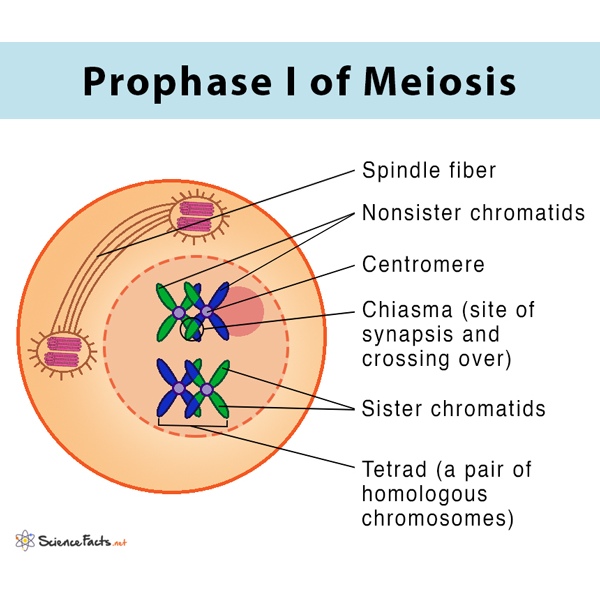
Prophase I
- Chromosomes condense and pair up (synapsis)
- Crossing over occurs at chiasmata
- Nuclear envelope breaks down
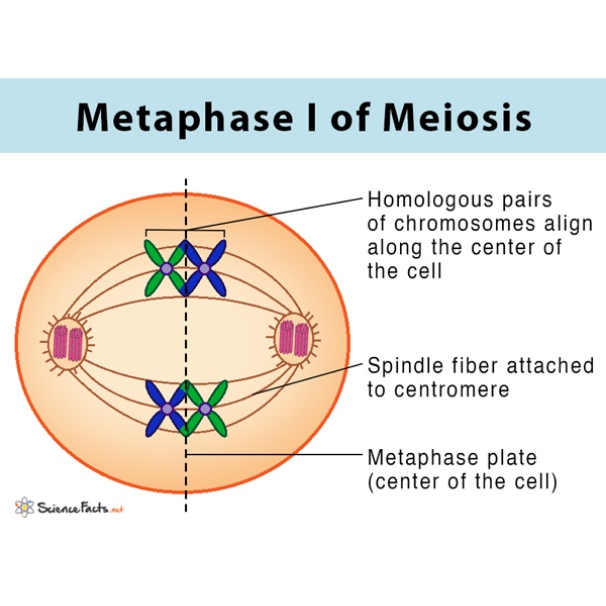
Metaphase I
- Homologous pairs align at metaphase plate
- Independent assortment occurs
- Spindle fibers attach to centromeres
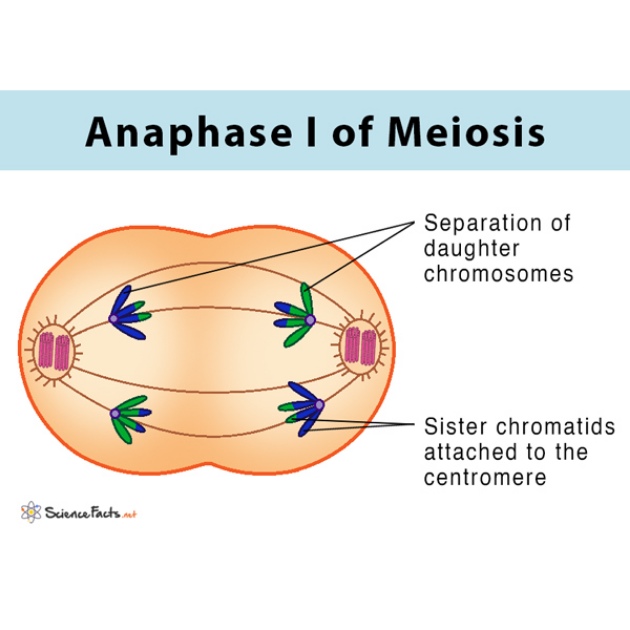
Anaphase I
- Homologous chromosomes separate
- Sister chromatids remain attached
- Chromosomes move to opposite poles
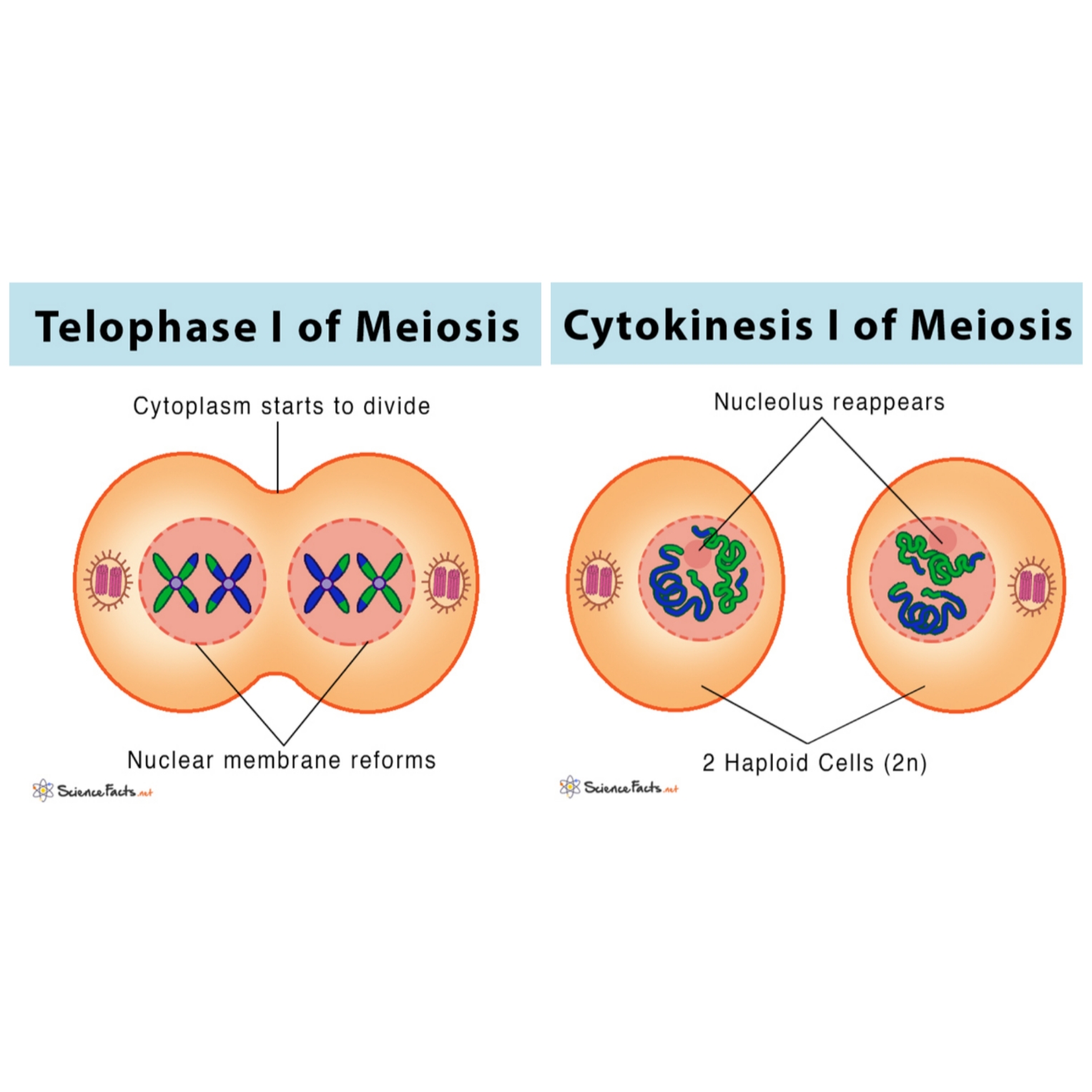
Telophase I & Cytokinesis
- Nuclear envelopes reform
- Chromosomes decondense
- Cytoplasm divides forming two haploid cells
Meiosis II: Equational Division
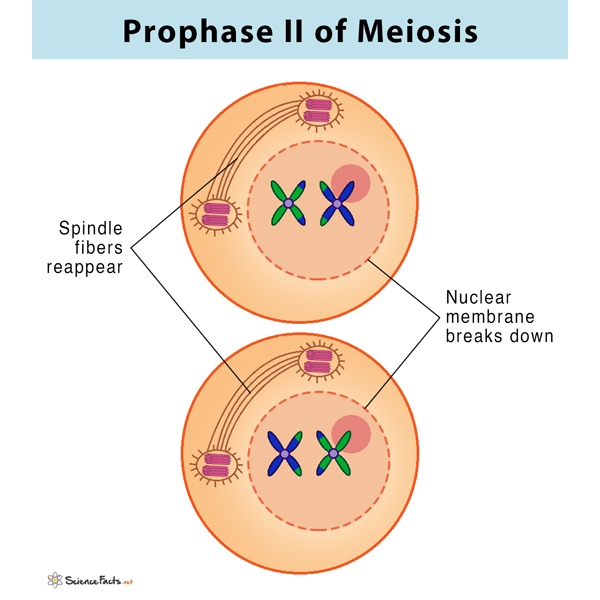
Prophase II
- Chromosomes recondense
- Nuclear envelope breaks down
- Spindle apparatus forms
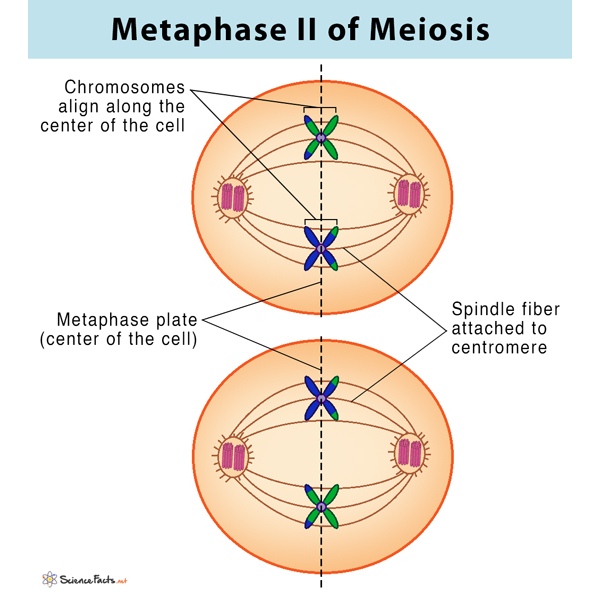
Metaphase II
- Chromosomes align single file at equator
- Centromeres divide
- Spindle fibers attach to each chromosome
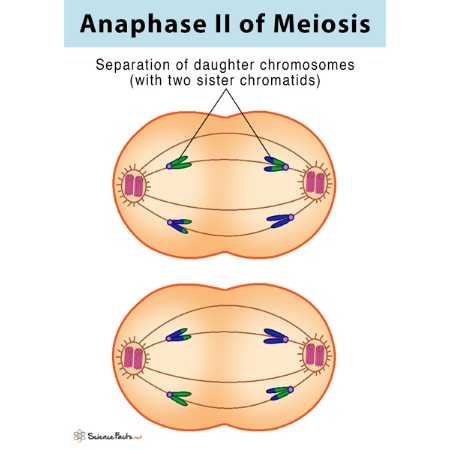
Anaphase II
- Sister chromatids separate
- Chromatids (now chromosomes) move to poles
- Complete set of chromosomes at each pole
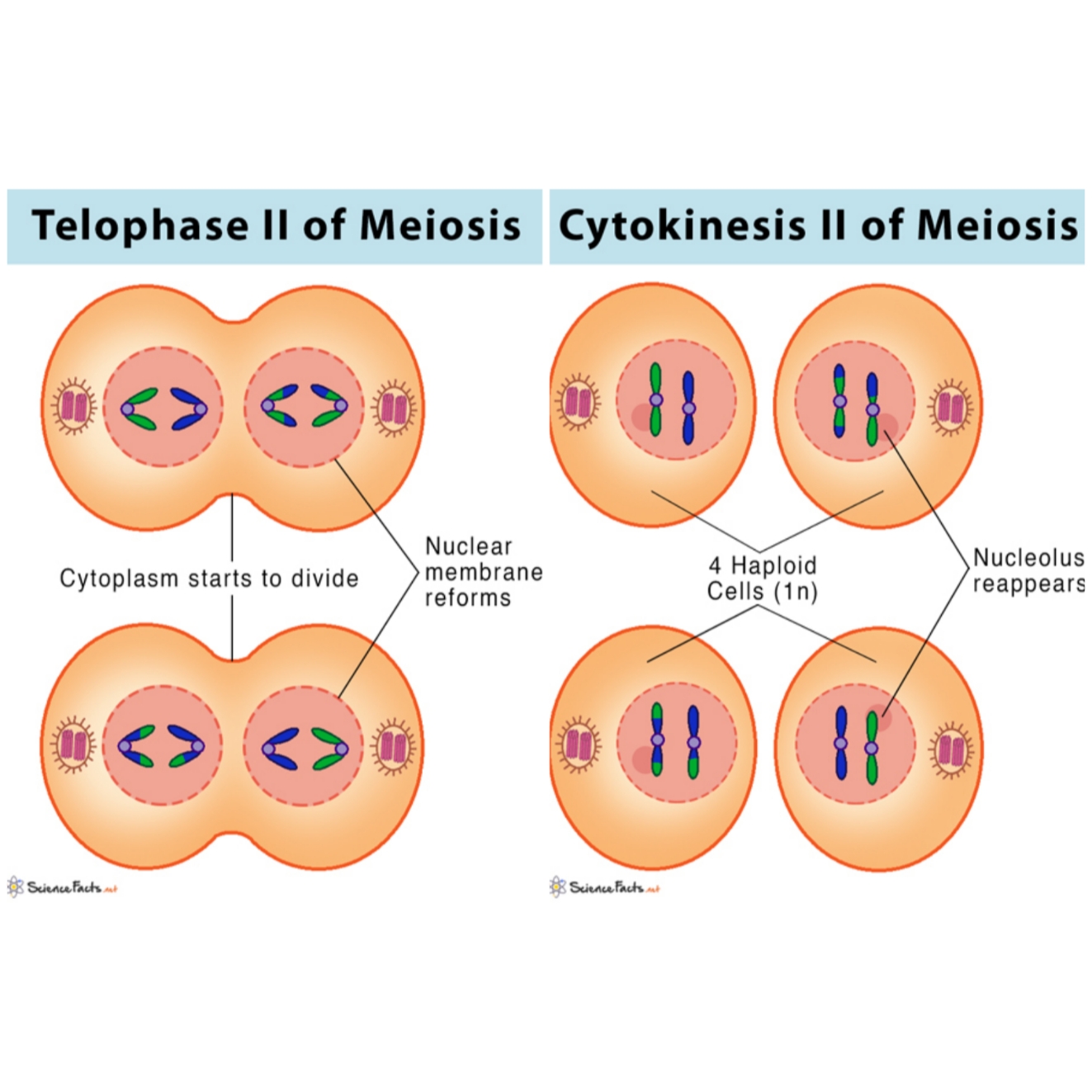
Telophase II & Cytokinesis
- Nuclear envelopes reform
- Chromosomes decondense
- Cytoplasm divides forming four haploid gametes
Final Result of Meiosis
Thus at the end of meiosis II, four non-identical, haploid daughter cells are formed, each having half chromosome number as the original parent cell.
Mitosis vs. Meiosis
| Feature | Mitosis | Meiosis |
|---|---|---|
| Cell Type | Somatic cells (body cells) | Reproductive cells (gametes) |
| Number of Divisions | One | Two (Meiosis I and II) |
| Daughter Cells Produced | Two diploid cells | Four haploid cells |
| Chromosome Alignment | Single file at metaphase | Homologous pairs (tetrads) in Meiosis I |
| Genetic Variation | None (identical to parent) | Yes (crossing over and independent assortment) |
| Purpose | Growth, repair, asexual reproduction | Sexual reproduction (gamete formation) |
The Stages of Mitosis
Interphase
Cell prepares for division, DNA replicates
Prophase
Chromatin condenses into chromosomes
In Late Prophase
Starts to Catch and put Together the Chromosomes
Anaphase
Sister chromatids separate to poles
Telophase
Nuclear membranes reform
Cytokinesis
Cytoplasm divides into two cells
References
Textbooks
- RBS Science and Technology Series Science Links 8 Lesson 13.1: The Cell cycle and Stages of Mitosis p.420 Lesson 13.2: Meiosis- Reproduction Of Gametes p.426 Revised Edition ISBN 978-621-04-4673-9 Classification: Worktext (03-SB-00133-0) Reprinted: February 2023
- Science in Today's World Updated and Revised Edition 8 Chapter 14 Cellular Reproduction p.184-191 Copyright 2022 By Sibs Publishing House, Inc. Eden Vela-Evangelista, et al.
Online Resources
- YouTube: Mitosis and Meiosis Explained
- Ask A Biologist - Arizona State University
- Owlcation: Stages of the Cell Cycle
- BioExplorer: Mitosis Overview
- Image Source: By Ali Zifan (CC BY-SA 4.0), via Wikimedia Commons
Quick Mobile Access
Scan this QR code to quickly access this cell division resource from your mobile device:
- Perfect for classroom use
- Easy to share with classmates
- Save for offline reference